Snakes on a Plane!
Okay, so I didn’t really see these snakes on a plane. More like “Snakes in Terrariums!” What can I say? Just couldn’t resist that title!
As you have probably surmised already, these snakes were in the zoo part of the Okefenokee Swamp Park.
And now a disclaimer! If snakes give you the heebie-jeebies. . .
DON’T READ THE REST OF THIS POST!
For the brave souls and herpetologists among us… read on…
The first snake we saw in the building was one that happens to also be indigenous to our part of the world. Behold the copperhead snake:

Copperhead snake (Agkistrodon contortrix)
Their habitat is wooded hillsides with rock outcroppings, above streams or ponds. Fortunately, I haven’t see any on our farm, though our neighbor swears he’s seen bunches.
The next slithering jewels are Dusky Pygmy Rattlesnakes.
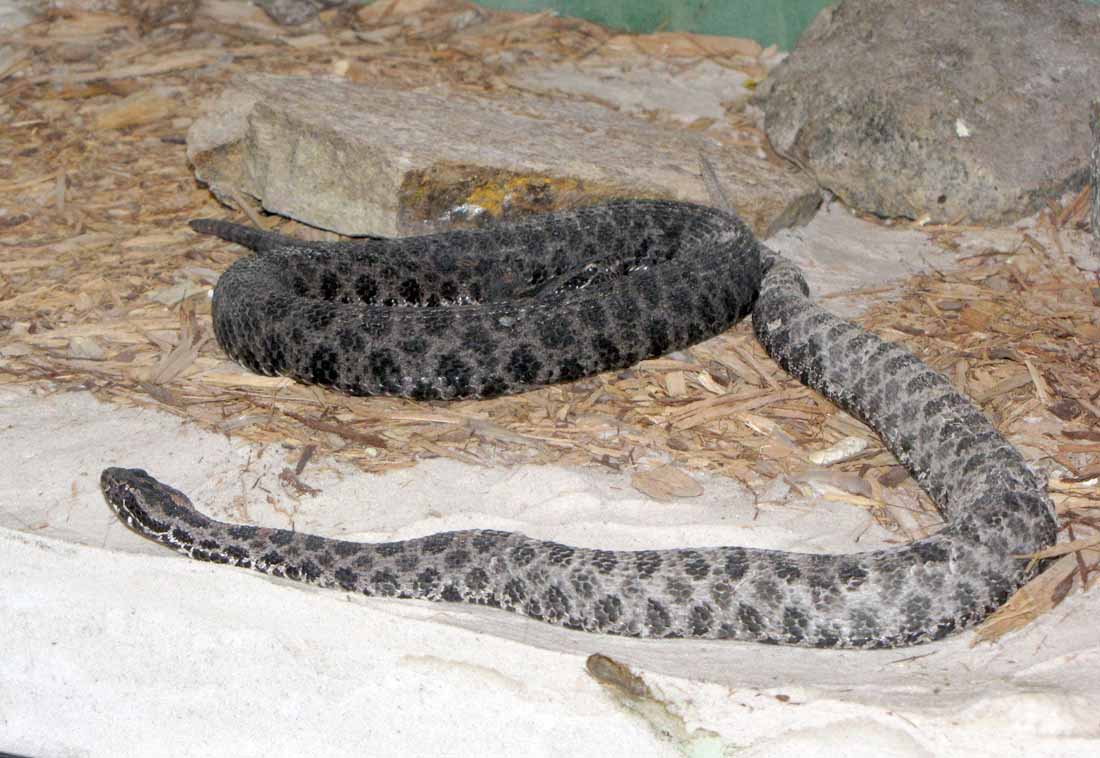
Dusky Pygmy Rattlesnakes (Sistrurus miliarius barbouri)
This snake is also known as the Florida Ground Rattlesnake. It is a venomous pit viper native to the southeastern United States. It’s range only extends into southern Alabama, so this is one snake I don’t have to worry about encountering on the farm!
I wish I could say the same for this next reptilian rascal, the Eastern Cottonmouth snake, also known in these parts as the Cottonmouth Moccasin.

Eastern Cottonmouth (Agkistrodon piscivorus)
We used to see a lot of these sunning themselves on big rocks beside the creek here. I think it’s interesting they are the world’s only semi-aquatic viper and are strong swimmers. They supposedly like slow-moving and shallow lakes and streams (otherwise known to us hicks as creeks, ha!)
These snakes get up to around 74″ long and are capable of delivering a painful and potentially fatal bite. We don’t see as many of them as we used to. That may have something to do with The Farmer and our neighbor and shotguns. . .
This next fellow is the most common rattler in the Okefenokee Swamp, the Canebrake rattlesnake.
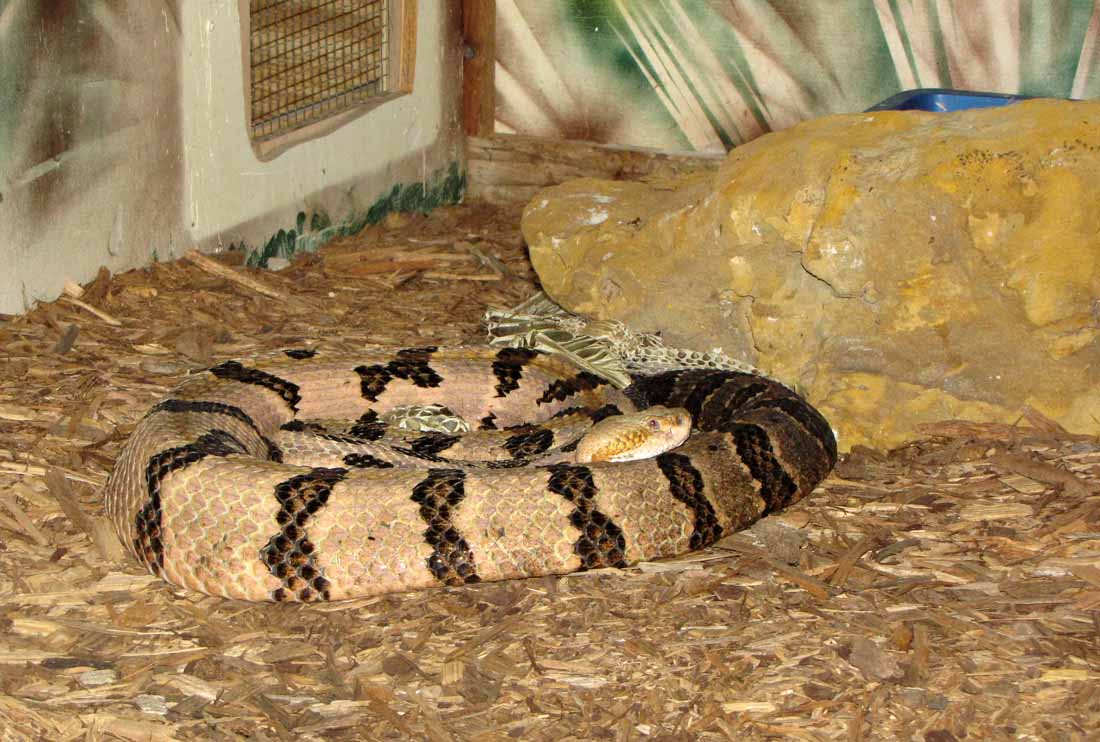
Canebrake rattlesnake (Crotalus horridus)
It’s also known as a Timber Rattler or Seminole Rattler. Although it is the most common rattler in the swamp, it is also the only rattlesnake species in most of the northeastern United States. It can grow up to 60″ long.
And then we have the big dude, the Eastern Diamondback Rattlesnake.
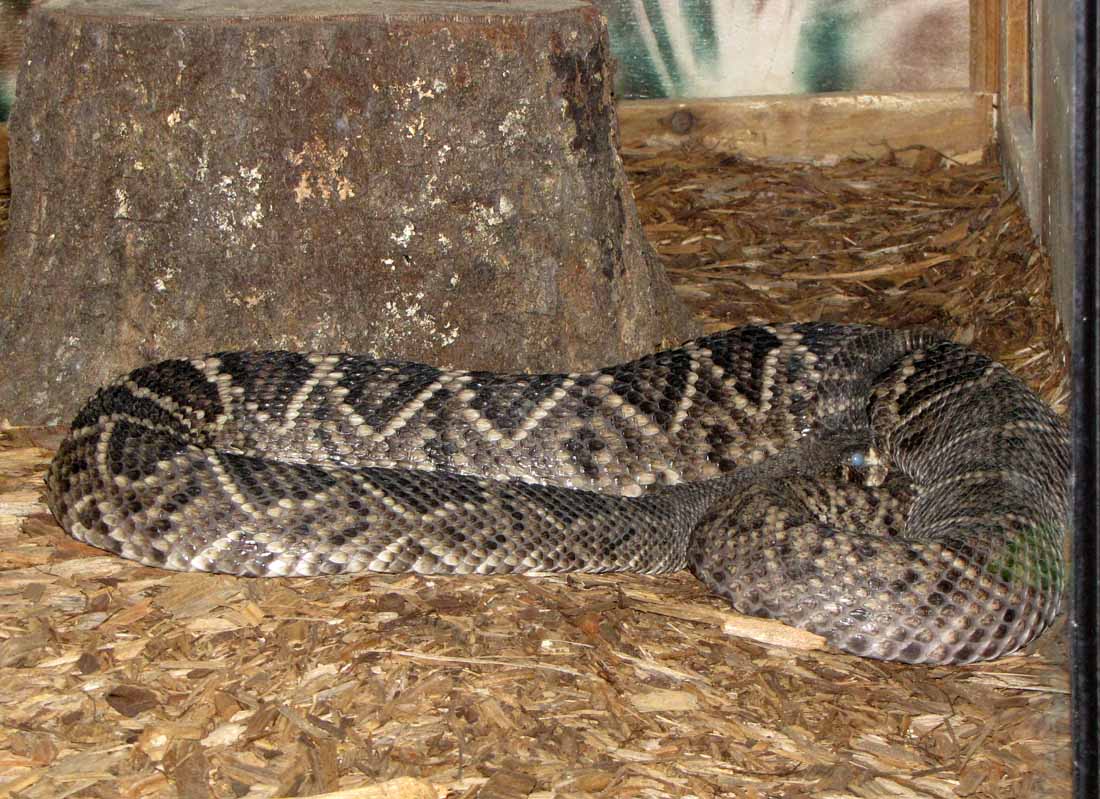
Eastern Diamondback Rattlesnake (Crotalus adamanteus)
This bad boy is the heaviest venomous snake in the Americas, and the largest rattlesnake. They can get up to 8′ long! These snakes frequently shelter in mammal and gopher tortoise burrows, emerging in the early morning or afternoon to bask.
I, for one, have no desire to see one basking in the wild. For that matter, I’d just as soon not see any of these venomous reptiles in the wild. They’re interesting to see, but only when I know they can’t get at me.
