A Mice Mess
Or, “Why I Had To Buy Mouse Traps”
Or Even, “Why All My Feed Is Now In Metal Trash Cans”
The cotton fields are picked over and the leaves are falling. The weather is getting nippy, so out in the country, the wild things are looking for winter shelter. In most cases, that doesn’t have much effect on the farm, with one notable exception. Field Mice.

For these little critters, a nice, snug mouse house is a big plus for surviving frigid weather. Every fall, some of them try to move inside buildings, so it wasn’t too surprising to find several field mice had set up housekeeping in the feed room. From their point of view, they’d discovered an ideal condo. No more cold wind. No more wet. Best of all, there was a stockpile of food handy, and even a big pile of baling twine to make delightfully cozy nests. What more could a mouse want?
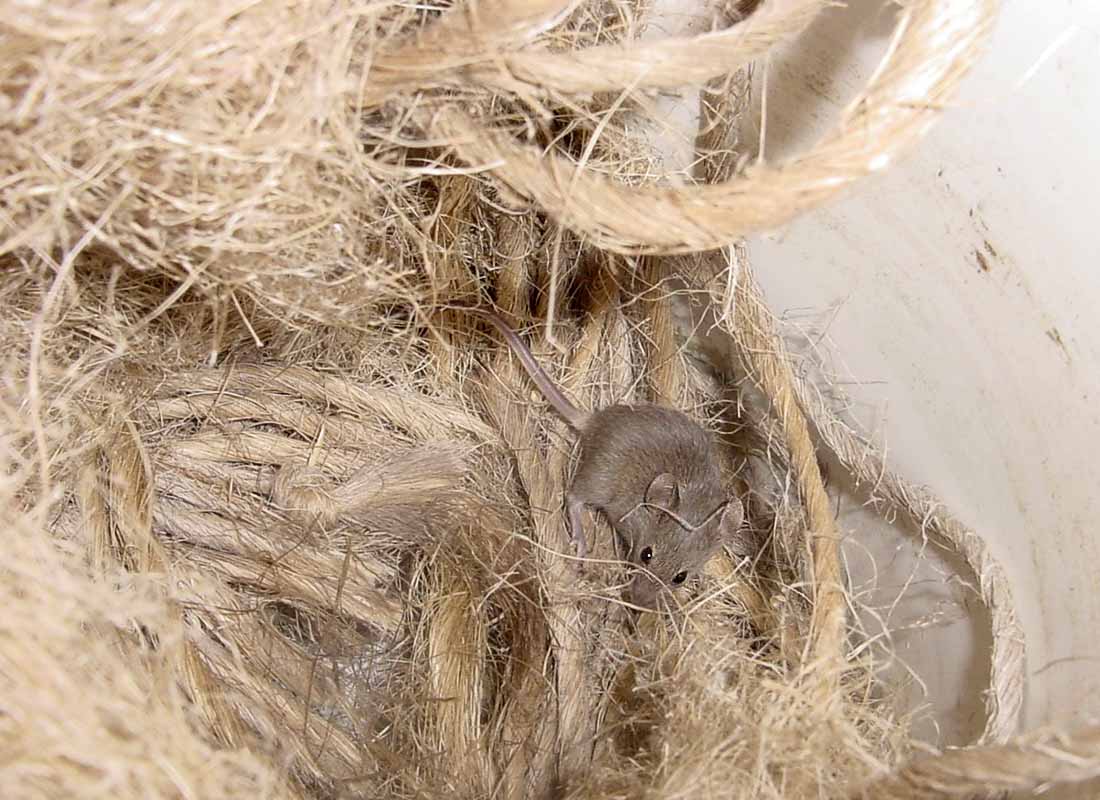
There’s a wide variety of feeds in there, but the mice seem partial to the black oil sunflower seeds. They not only make a luscious snack, but pack a high protein punch for lots of energy. These sunflower seeds also have oil to promote a nice sleek pelt, creating the most lush fur coats seen on mice yet! (Anybody want to try a nice mouse fur coat? Come see me!)
Considering they chewed a hole in the bottom of a big fifty pound sack, it would also seem like a never ending supply of food.
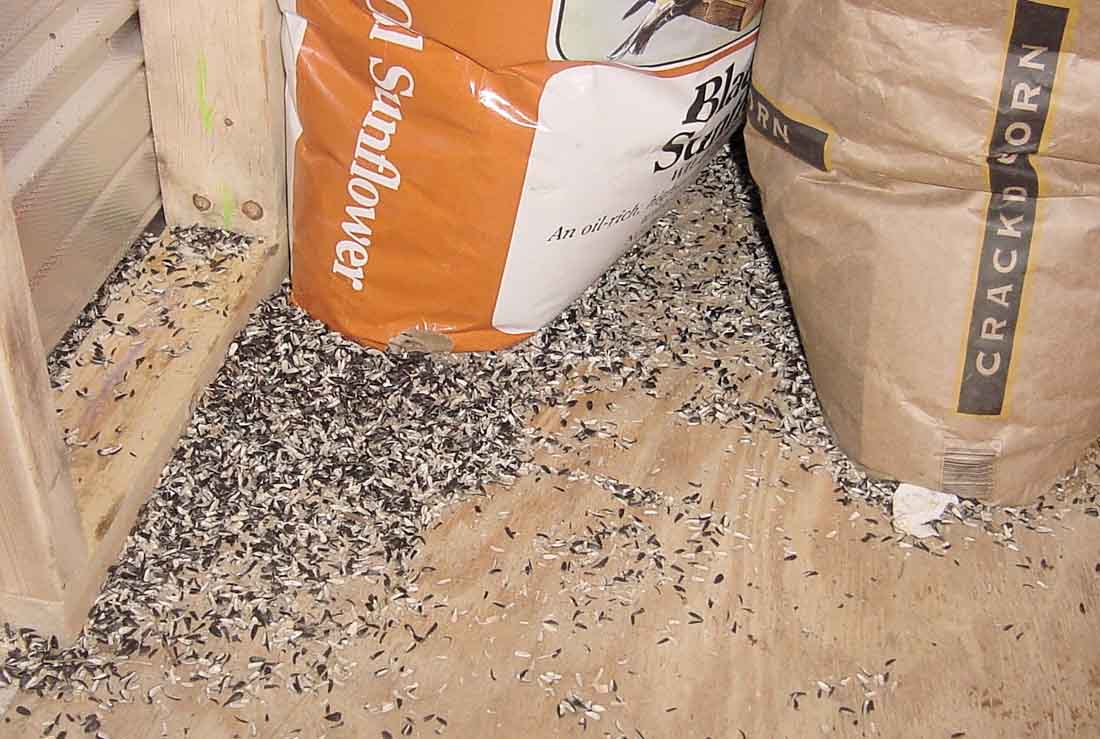
In short, the mice were in hog heaven… uh…. mouse heaven. (Mice Mirvana?) What enraptured rodents! Such merry mice! They were in the domicile of their dreams.
However, upon surveying the havoc they’d created, I had trouble thinking of them as cute little critters. Phrases like “raunchy rodents” and “miserable monsters” seemed more appropriate as I surveyed the chaos. The remains of their feasts were evident everywhere, with piles of sunflower seed hulls, and little “calling cards” of digested material scattered profusely. The smell of mouse urine pervaded the air. In short, a real mega-mouse mess.
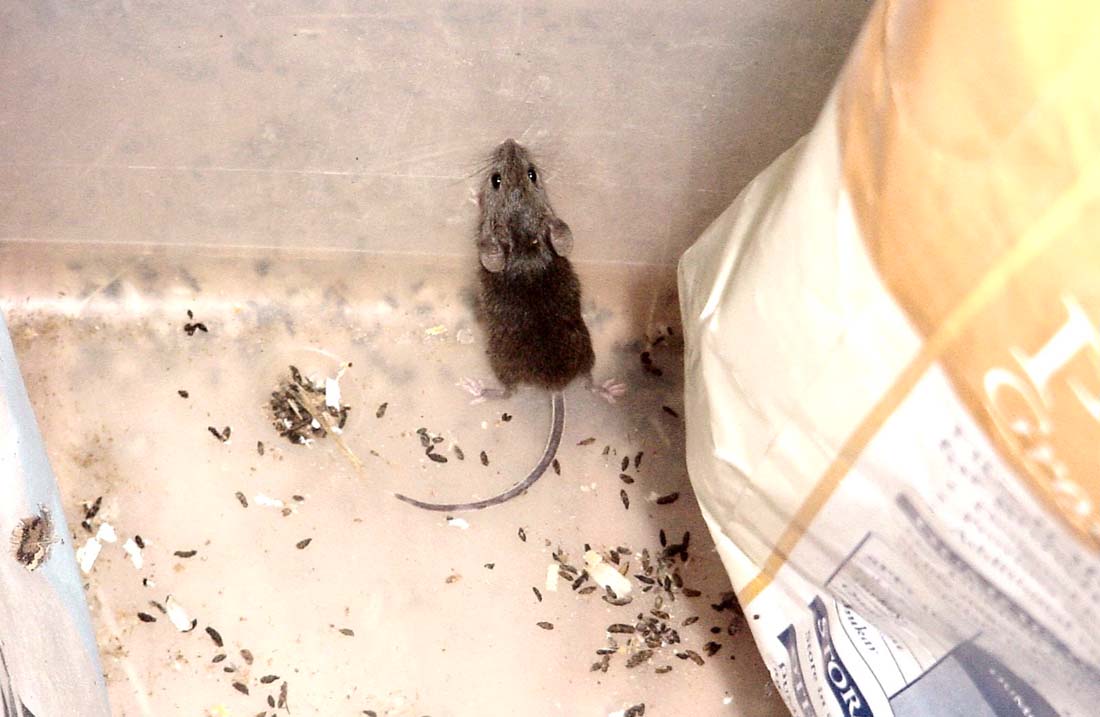
Since the ogre human – me – didn’t want mice in the feed room, with the nasty mess and possible disease factor, I figured it was time to clean house and give the mice an eviction notice.
This meant moving big sacks of feed around, which is a great exercise work out. Even just scooting 50 pound sacks takes some doing for less muscular types like me. Sweeping up the debris also makes for pretty good calisthenics. The only problem is it meant keeping the door open to clear out the refuse. The sheep and goats know full well where the feed is, and wanted to poke their heads in and try snagging a little snack. Every time I’d try to sweep something out, my broom would come in contact with inquisitive noses. Finally, I set a big cart in front of the door to keep the wooly “pigs” at bay.
Even the mice became bold as I moved stuff around, and scampered all over the premises, no doubt enraged that I should be so unkind as to move their food sources, and throw out their nesting materials.
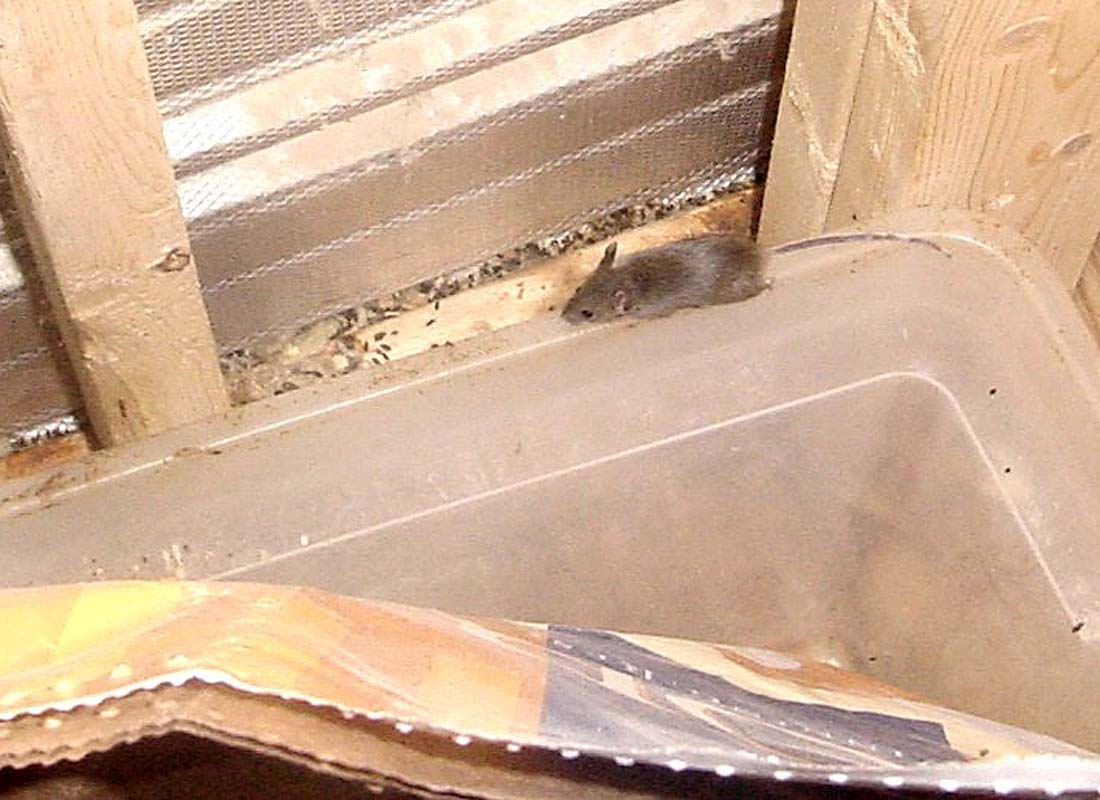
I’d work on one side, they’d go to the other. Every time I moved a sack, a mouse went running. A couple of them even tried mountain climbing up the crevice between a feed sack and plastic bin.
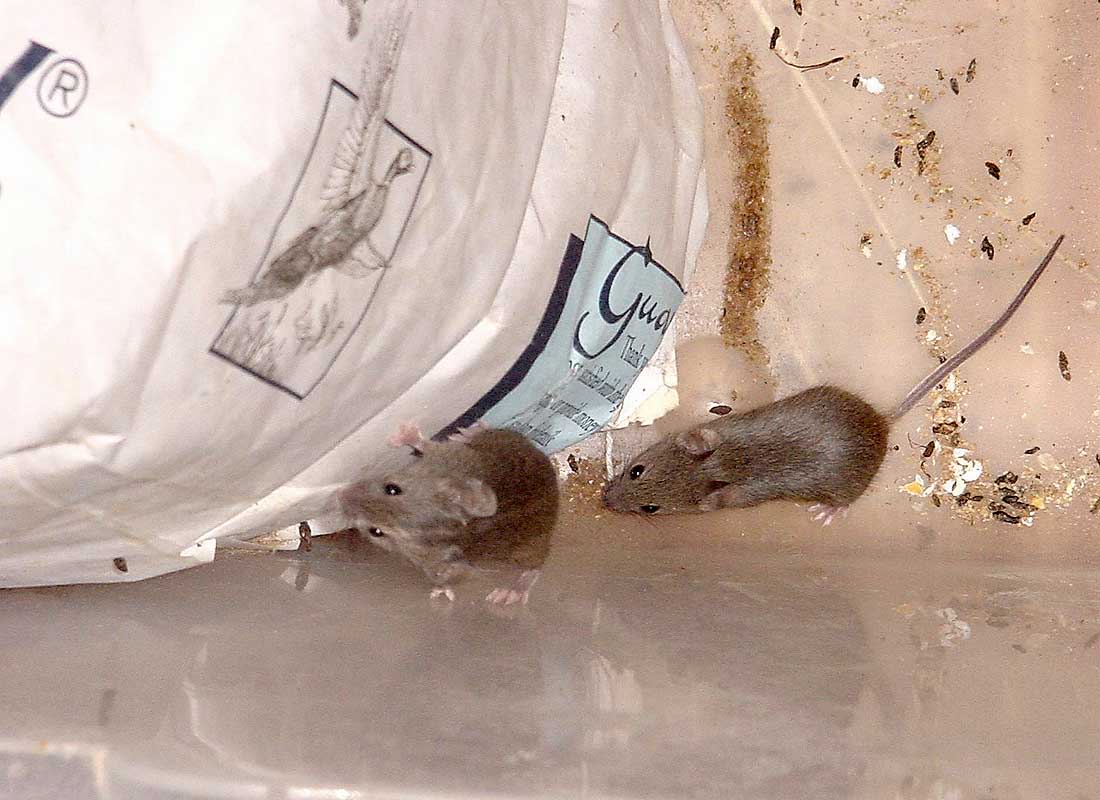
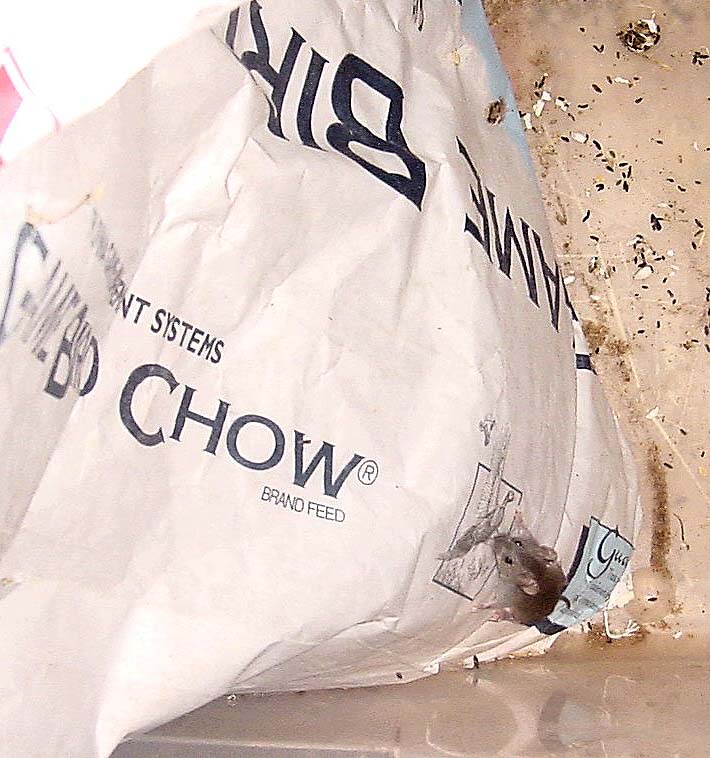
After spending a beautiful afternoon clearing out such a nasty mouse-made mess, I decided it’s time these meandering eating machines met a different sort of creature. Perhaps a little mouse mayhem would be in order, created by adding a new resident to the feed room.
Mice, guess who’s coming to dinner?
Time to meet… CATZILLA.
Bon appétit.
Slug And Eggs
Slug and eggs . . . kind of sounds like some weird breakfast, doesn’t it?
Maybe I should have titled this:
Mrs. Jabba The Hut & Future Offspring
Whatever you want to call it, I was refilling water bowls Friday and picked one up to empty the old water out first. That’s when I discovered the space underneath had become an incubator. I actually caught the slug in the act of laying eggs.

I checked again this morning, and evidently the egg laying part is over, but apparently the slug is sticking around to stand guard.

Considering all the damage slugs inflict on my hostas, I suppose I ought to eradicate this batch, but I’m kind of interested to see if they actually hatch out.
Naturalist vs. Gardener. Never know which one is going to win out.
Turtle Triathlon
Turtles do a different kind of triathlon than people. They can run – really! Turtles can move fast. And they can sure swim if they’re the right kind of turtle. But as you might imagine, they have a little trouble with that bicycling part.
First they start with the running. They go walkabout somewhere, and then come running back through the grass to get to the pond.

They can zip along so quickly, that all of a sudden they are IN the pond. (And somebody missed the picture of them tumbling in!)

For the second part of their triathlon, they go for freestyle swimming. First they float around for a while to sort of warm up.

After that, they do a lesiurely front crawl. . .

And take the time to clown around a little bit and play with water refraction and reflections to pretend to be the Loch Ness monster.

When the turtle finally feels sufficiently warmed up, it starts the underwater swimming part of the competition and really dives down into the water.

Once underwater, the turtle swims around and around in the pond.

Occasionally the turtle pops up near the bank to get its bearings.

Until finally it swims past the finish line while the spectator dragonflies cheer wildly. . .

Having completed the second section of the triathlon, it takes a few moments to savor this accomplishment and do a leisurely cool-down swim.
Since turtles can’t bicycle, not having the right form or bikes small enough to use, they do something different. For the final leg of the triathlon, turtles borrow from lumberjack competitions and do a form of boom running. With lumberjacks, this is a sport “in which the competitor must run across a string of logs attached end to end in the water. The object is to run across the log boom, around an obstacle, and back faster then your opponent(s).”

Our turtles do their own variation of boom running. They only run far enough along the top of ONE log (which has strings attached to keep in anchored in one spot) to find a good place to settle down. Then they participate in a sunbathing competition, seeing who can stay on the log the longest without getting scared off by some crazy woman with a camera.
Then I guess after all that strenuous competition, it’s time to relax.
Looking For Love In All The Light Places
Or The Light And Times Of A Firefly
Whether you call them fireflies or lightning bugs, summer nights wouldn’t be the same without them. Running around catching fireflies is a great evening game for kids!
Lightning bugs comes closer to being a more exact name than fireflies, however, because they’re not flies, they’re bugs. Fireflies are nocturnal members of the beetle family Lampyridae.
Of course, what makes them really special is that whole bioluminescence thing. They have specialized light-emitting organs that are usually located on the lower abdomen (kind of like a butt light, as opposed to a Bud Lite). It takes a mix of magnesium ions, ATP (adenosine triphosphate) and oxygen, along with the enzyme luciferase that acts on a biological pigment called luciferin to produce the light. (Wow! Sounds complicated, doesn’t it?)
It doesn’t matter how they do it, watching fireflies little lights wink on and off while listening to the night sounds of birds and frogs and such on a sultry summer night is downright magical.
In case you haven’t figured it out yet, this is a mating ritual. With most species of North American Lightning Bugs, the males are flying flashers, flashing their butt light in hopes of attracting a girl firefly.
The girls, being more demure, are usually near the ground, perched on some vegetation. If she sees a flasher to her liking, she flashes back right after she sees the male’s last flash. (Yep, the male is looking for love in all the light places!)
They continue to send flash messages back and forth (sort of like texting with light) as the male flies closer and closer. If all goes well and they don’t get their signals crossed, they mate.

If their signals DO get crossed, likely it was because the fireflies weren’t of the same species. Each type of Lightning Bug has a special flash pattern all its own so they can be sure to attract that special someone of their own species. There are all kinds of flash patterns, from a continuous glow, single flashes or a whole series of different length flashes.
The females deposit their eggs in the ground, under bark, and in moist swampy places. The larvae hatch out and feed on worms and slugs by injecting them with a special chemical that paralyze the prey and helps digest it. (I think I’ll stick to thinking about the adult fireflies. . .)
The adults, meanwhile, typically feed on nectar or pollen. Some species of adults do not eat at all, but they can live several months. They don’t have to worry too much about being eaten themselves, since most fireflies taste really bad and sometimes are even poisonous.
That ensures them more time to light up the summer nights.
Guineas Chasing A Snake
I was throwing out feed one morning when there was a BIG commotion. The guineas were going berserk! I noticed a bunch all rushing to one place, and I saw something I’d heard about but never seen before – guineas chasing a snake.

This was a good sized snake, and it was moving FAST! I couldn’t focus the camera quick enough before it had moved out of the picture again.
The guineas were in hot pursuit. . .

But the snake was in survival mode and had a destination in mind.

This snake obviously knew there was a hole in the tree, and was looking to escape there and get away from the guineas.

The guineas looked and screeched, but the snake got away from them.
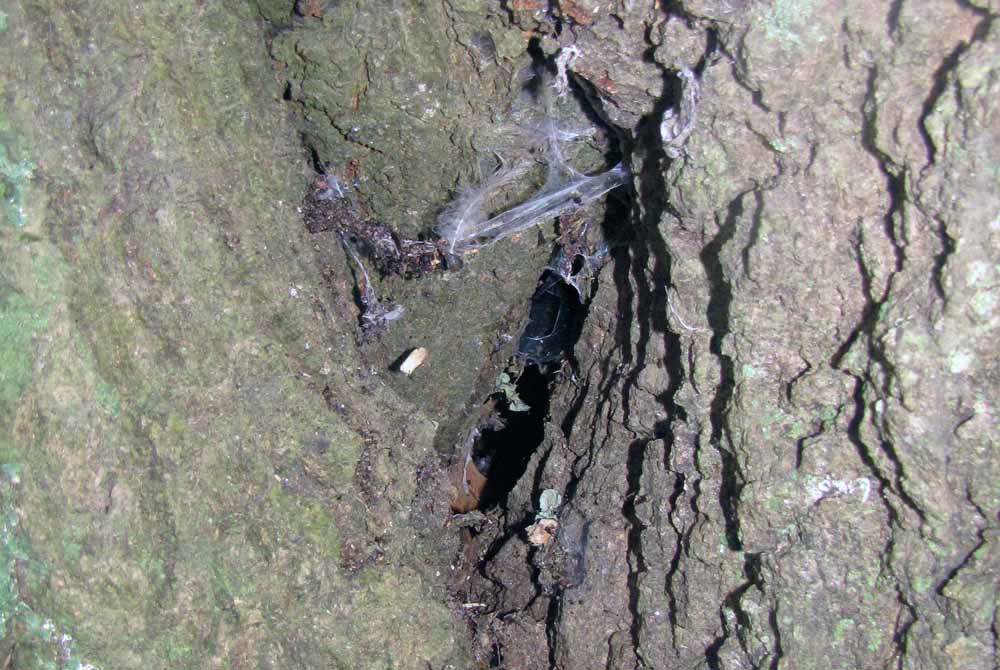
He disappeared without a trace into this hole. This tree has a big hollowed out section, so he (she?) no doubt has a nice little home in there.
It was pretty cool to see all those guineas chasing after that snake though!