Hatching Eggs of Quail
Hatching Eggs from Quail Birds. . .
 Quail are a common type of gamebird. Many people raise them as an additional income on the homestead, or just as a hobby. Sometimes it’s a little bit of both!
Whatever the reason you have for wanting quail, if you want to hatch the eggs you need to know the best way to do it. The following article has hints and tips for getting the best hatch rate from incubating quail eggs.
Hatching Quail Eggs – Important Tips to Facilitate Egg Hatching
Pheasant Hatching Eggs
Pheasant Hatching Eggs. . .
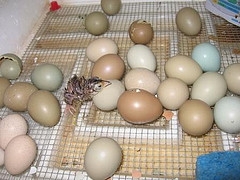 Gamebirds can be a nice addition to the homestead. You can buy adult pheasants, or the chicks, to get started.
Another way to get into the business of raising pheasans is hatching the pheasant eggs. Some people think of it as a business, and others consider it the start to a new hobby. This can be fun or it can be a real bummer, depending on how good you are at understanding the right way to raise pheasants.
First you must feed them the right food,
Second they must be in the right environment.
Third, which includes maintaining the correct temperature.
There are a lot of good incubators available that will do an excellent job of hatching ringneck pheasant eggs. Follow the instructions that came with the incubator you bought, to find the right temperature and humidity settings. You may need to experiment to see what works best for you in your area however.
[affmage source=”ebay” results=”3″]incubators[/affmage]Incubator trays are constructed so that pheasant eggs can be positioned with small end down. There are a some incubators that will allow the pheasant eggs to be placed on their sides, which is the ormal hatching position. There are some breeders who think this increases hatching success.
Ringneck pheasant eggs should be turned at least three times and preferably five times daily. If you have automatic turners, every two hours works well. Temperature readings vary slightly with different types of incubators. Ringneck eggs require from 23 to 24 days to hatch and for the chicks to dry off.
Whatever type of brooder facilities are used, be sure they have been disinfected and dried out. Dry shavings or straw work well because they provide good footing and absorption. Don’t use paper because it’s too slippery. That could result in deformed legs.
The brood area should be sized according to the number of chicks. Day old – 2 weeks .25sq.ft per chick, 3 weeks – 6weeks .75 sq. ft. per chick. Outdoor grow out pens with ground cover should be large enough to provide 15-20 sq. ft. per bird.
Keep the chicks warm. The easiest thing to use is heat lamps. For every 100 chicks you’re raising, at least one 250-watt infrared bulb. Make sure to get a bulb with a red end. That way it isn’t so bright and will help control cannibalism. The bottom of the heat lamp should be about 18 inches from the floor. The temperature at floor level should be 95-100 degrees.
Keep them shielded from drafts the first 5-7 days the pheasants are in the brooder. A circle of cardboard about 14-18 inches high will work fine. A circle with a diameter of 4 feet will be sufficient for 50 chicks (with the heat lamp in the center).
For food, there should be at least one 2 foot long feeder for each 50 chicks and 1 one-gallon waterer for each 75 chicks. Make sure the chicks can’t fall in the trough and drown. If there is too much space, fill it with marbles to keep them out, but still allow them to get to plenty of water.
Until the chicks are six weeks old they should be fed a 28-30% protein medicated gamebird or turkey starter. The feed should be in crumble form. Never use a chicken feed at any stage of development.
This will give you a good start in pheasant hatching eggs.
Hatching Pheasant Eggs
[affmage source=”ebay” results=”7″]pheasant eggs[/affmage]Quail Hatching Eggs
Quail Hatching Eggs. . .
 Lots of people like to raise gamebirds, and one of the popular types are quail.
You can buy chicks, or if you know someone nearby who raises quail, you might be able to buy some eggs from them. Or perhaps you bought chicks or even adult quail, and they are now grown and laying eggs, and you want to try hatching some eggs in an incubator.
Whether you want to raise quail from eggs for your own use, or go into business of selling the quail, this article will give you some tips on how to take care of the eggs to get them to hatch out.
Bobwhite Quail Eggs
Bobwhite quail is the most commonly bred quail species in the world. Countless bobwhite quails are bred on farms to meet the ever-increasing demand for Bobwhite quail eggs worldwide. There are several websites over the Internet that sell eggs of bobwhite quail and even ship them to your destination. You must go through the various sites and compare their prices and offers. This way you will be able to select the best offers on the eggs.
Fully-grown bobwhite quail hens can lay more than 100 eggs per year. They can even lay more eggs if they are exposed to light for more than sixteen hours per day. The eggs are pure white in color. Eggs can be laid one each day. These eggs are more pointed compared to chicken eggs. Bobwhite quails are capable of producing large quantity of eggs. It is easy to raise them; they mix well and interbreed too. Hence, they are bred. Families in the business of selling this variety of quail eggs have farms and their generations carry on this activity. This has been going on for years.
Marketing: You must have your strategy in place if you wish to get into the business of hatching Bobwhite quail eggs. Few producers take orders for them even a year or two in advance.
[affmage source=”ebay” results=”5″]quail[/affmage]Humidity & Temperature: Hatching quail eggs keep the humidity of the machine to about 60 per cent for the initial 20 days. For the last three days you can raise the humidity to 75 per cent. If there is not enough humidity the eggs might just dry off and the embryos might not survive. And for the last 3 days if humidity is too low the chicks might get stuck in their own shells if they try to hatch.
When you hatch the bobwhite variety of quail eggs ensure that you maintain the temperature of the air incubator at 99.5°F or 102°F, if you have a still-air incubator. You must place the incubator in a room where temperature does not fluctuate too much and is more or less stable. If you keep them at the right temperature in 23 days you will have great bobwhite chicks.
Turning: You must turn the eggs thrice a day for good results. You can put some marking on the eggs that will help you turn them properly and will ensure equal incubation on both sides of the egg. Last three days of hatching you must not turn the eggs. So, you must stop turning the quail eggs from day 21. Few tips for hatching or purchasing Bobwhite quail eggs: • Buy from producers who are well known and reputed • The stocks you choose must have a decent egg production history • Hatched eggs must be more or less uniform in size. There should not be any cracks on them. • Chicks must be active, alert and perfectly normal. • Birds must be free of disease. • Check the birds if possible that they are uniform in color, size, shape, etc. and that they are normal.
Quail Hatching
Quail Hatching. . .
 If you are interested in raising quail, a good way to get started is hatching some eggs. You can order them from hatcheries, or if you’re lucky, you might be able to find a friend or nearby breeder that has some for sale.
Here’s some information on how to hatch the quail eggs. It always helps to learn as much as you can before trying this on your own. Give yourself every opportunity to get a good hatch rate by doing it right!
Hatching Quail Eggs – Important Tips to Facilitate Egg Hatching
Author: G. Smitty
In the food industry bird eggs are commonly used in many dishes. They are known for their versatility and are very important in modern food business. Bird eggs that are usually used include eggs of duck, chicken, goose, emu, quail, gulls and ostrich just to name a few. In fact, quail eggs are a delicacy in many countries. They are considered to be a gourmet ingredient. Quail eggs can be obtained from local farmers, luxury grocery shops or poultry owners. Quail eggs can be used raw or in cooked form in sushi. Many countries you will find that a hard-boiled quail egg are used as a topping over hamburgers or hotdogs. Due to its universal and exotic appeal hatching quail eggs is a lucrative activity.
Firstly, you will need an incubator that can be used to hatch quail eggs. Try and go in for an incubator that does not require any external ventilation. In fact you must prefer an incubator that has ventilating holes to circulate the air within. This area is like a refuge and safe place to the eggs in the mother’s absence. Eggs are hatched and rested in the incubator.
When you are hatching quail eggs, place the eggs with the nose down in the incubator. This means that the small side must face downwards. For an equal incubation on both sides you could turn the eggs twice or thrice during the day. Eggs create their own energy and this energy is used for hatching. Maintain sixty five percent humidity in the incubator and ensure that the temperature is appropriate. Quail eggs take anywhere between twenty two to twenty five days for hatching.
The following tips will help you to hatch quail eggs:
1) Do not add too much water to the machine else it will raise the humidity. An advice here to you is that do not add any water during the incubation process.
2) If you have a still air machine you must set the temperature at 38.5-39 Celsius or 103.1-102.2 degree Fahrenheit. In case your machine has a fan that helps to circulate air, the temperature should be 38 Celsius or 100.4 degree Fahrenheit. You must keep a check on the temperature and at the same time do not adjust it several times once the eggs are in.
3) Before you place the eggs in the incubator let them stand at room temperature for a few hours.
4) Regularly turn the eggs for equal incubation. It is ideal to turn them once in the morning, once in the afternoon and lastly once in the evening. In case your incubator has an automatic turning machine ensure that it is working fine. After the fifteenth day you must not turn the eggs.
5) After 6 days it is possible to check fertility of the eggs with the help of a candling lamp. The embryo must be clearly visible and red in color. After 14 days in case the eggs have become fertile, there will not be light passing through. Take proper care to see that eggs are not overheated in the testing process. Another point to be noted is that it is not necessary that if they are fertile they will all make it out of the shell.
6) Do not open the incubator after the 15th day. Let the baby chicks dry out completely before you remove them.
7) Clean the machine properly after every hatch. The above tips will benefit you a lot and surely help you in hatching quail eggs.
About the Author – G. Smitty is a writer who loves to discuss many topics ranging from bobwhite quail eggs to professional basketball. Thanks for reading!
Coturnix Quail hatching in incubator
.