Guinea And Keets
I’m still busy working on calendars. I have the pictures for the big one almost done. It takes the longest because I do some special effects on some of them. On the smaller calendars, I can use some of the same pictures. Not all, however, because the ratio is different on the picture sizing, so some won’t work.
Anyway, even while trying to get calendars done, I have to do the usual farm chores. The critters don’t want to go hungry just because I’m busy!
Last night when The Farmer and I went to feed, we saw the “main” mama guinea with her little keets tucked under her. Some of the little heads peeped out to see what was happening when we walked by.

We count 17 or 18 keets when we can see them, but it’s hard to be accurate as fast as they move around. It’s impossible to get a picture showing all of them, because there are usually about 5 adult guineas watching over them, and some of them are always in the way.
Their team mothering approach seems to work pretty well. They aren’t losing near as many keets these days!
We have 6 other keets in an older group, and the 5 from the earliest group are almost full grown.
There sure are a lot of guineas running around here. Add in 2 or 3 dozen chickens, and things are getting pretty fowl.
Cool Chicks
It’s autumn, and the temperatures have dropped enough that I’m not wearing shorts when I go out to do chores. Time for long pants! Therefore I think it’s safe to say these are some cool chicks:
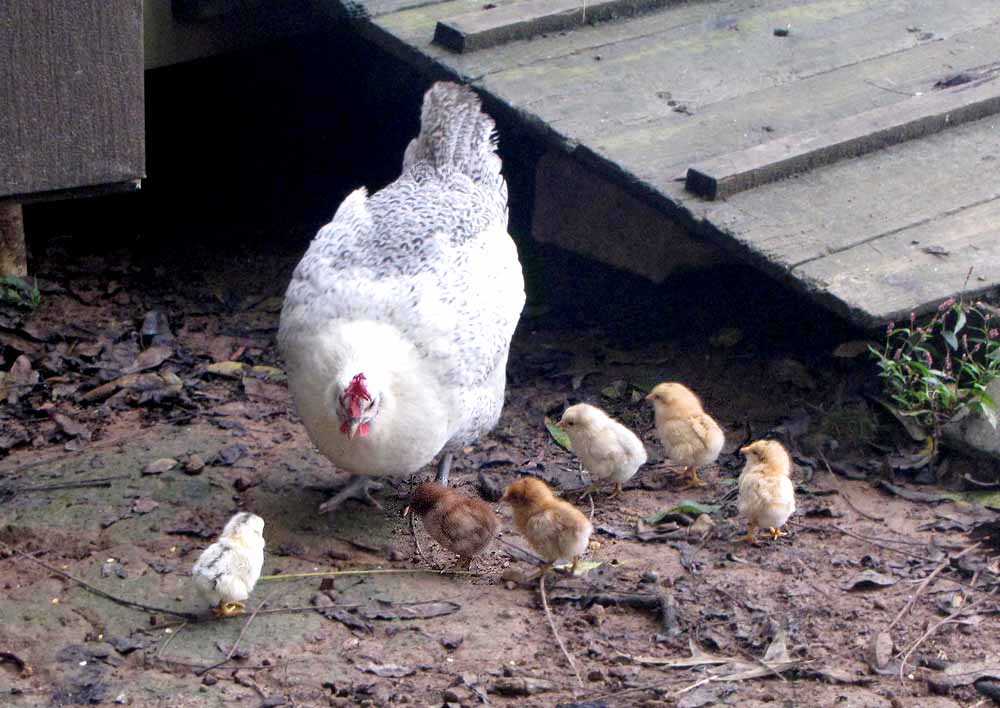
We got our first look at these little guys this past Saturday (September 26th) when their mama, Peepers, brought them out from under the shed for the first time.
The Farmer and I weren’t the only ones checking out the new chicks. Our matriarch ewe, Coconut, looked them over.
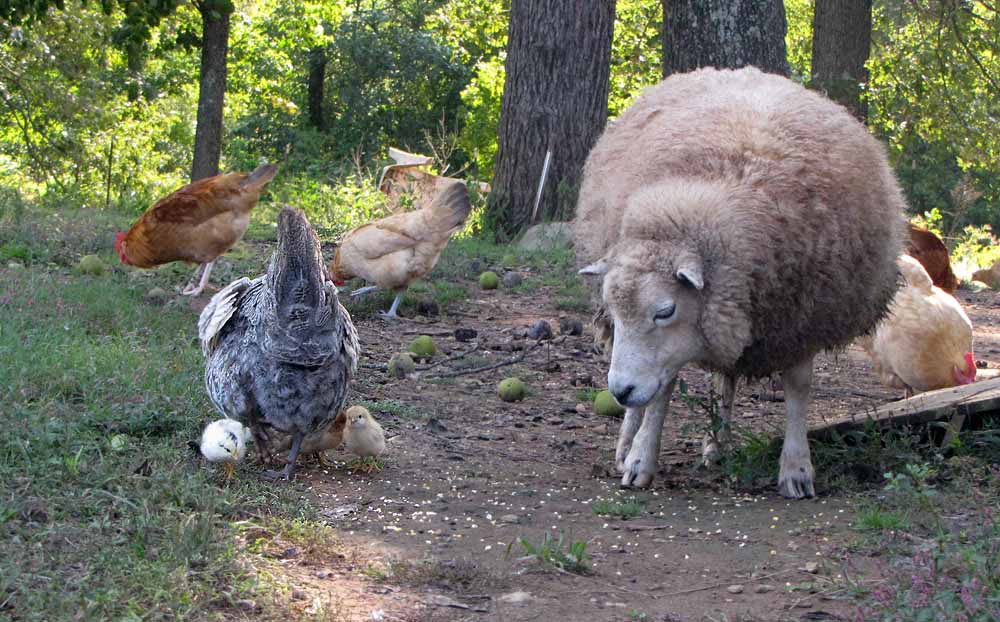
Then Cinnamon the goat had to give them a sniff.

And of course, the other chickens were curious about the latest arrivals, too. Peepers doesn’t like other chickens to get too close, so she fluffed herself up and called her chicks to come to her.
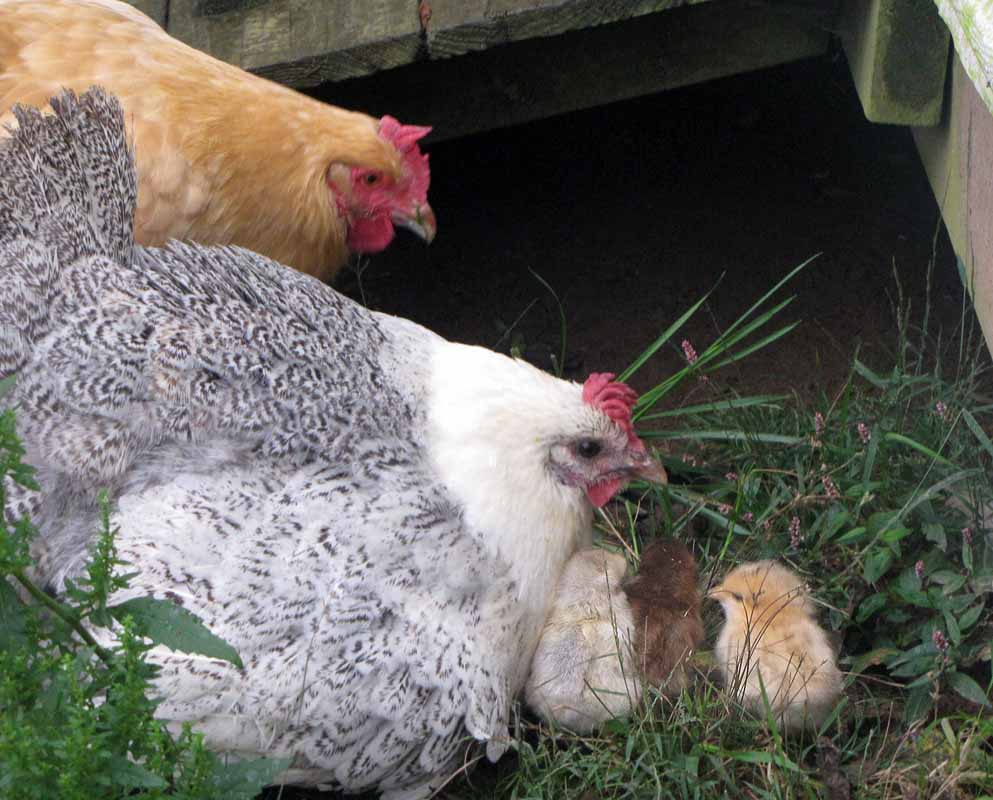
The chicks are all different colors. My favorite is this one little chicken that is two shades of brown. He reminds me of a cross between a moorit colored Shetland and a Hershey’s kiss.

I can’t wait to see what this chicken looks like when it feathers out.
Now Peepers is often out of sight under the shed with her chicks. So last night when I saw two little chicks hanging out with the guinea keets in the goat pen, I thought a couple of her chicks had wandered off with the wrong group.
I scooped them up, and set to the task of coaxing Peepers out with my usual “Come & get it” call. Then I quickly put the two little chicks down with her.
Thing is, six chicks came out from under than shed. The two I added made eight. Uh-oh. How’d we get two extras!???
Peepers made it clear they were not HER chicks!
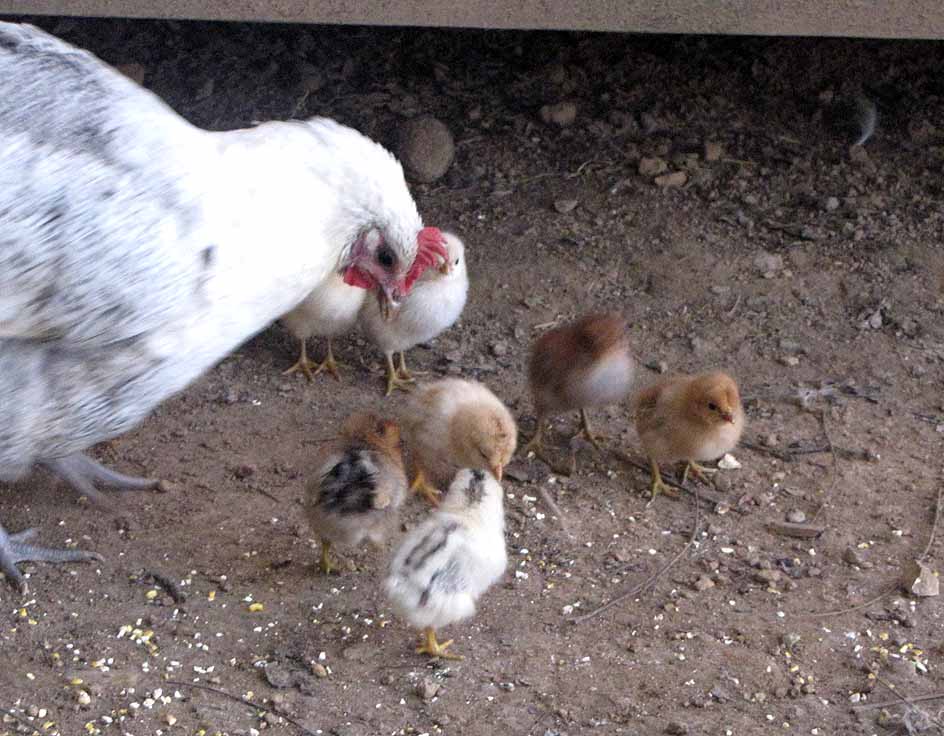
You don’t belong to me!
She had the equivalent of a chicken hissy fit, squawking and clucking, and pecking at the offending chicks.
Bottom line? I have NO idea where these two chicks came from. I can’t find any other hen with new chicks. The guineas didn’t want them. Peepers didn’t want them.
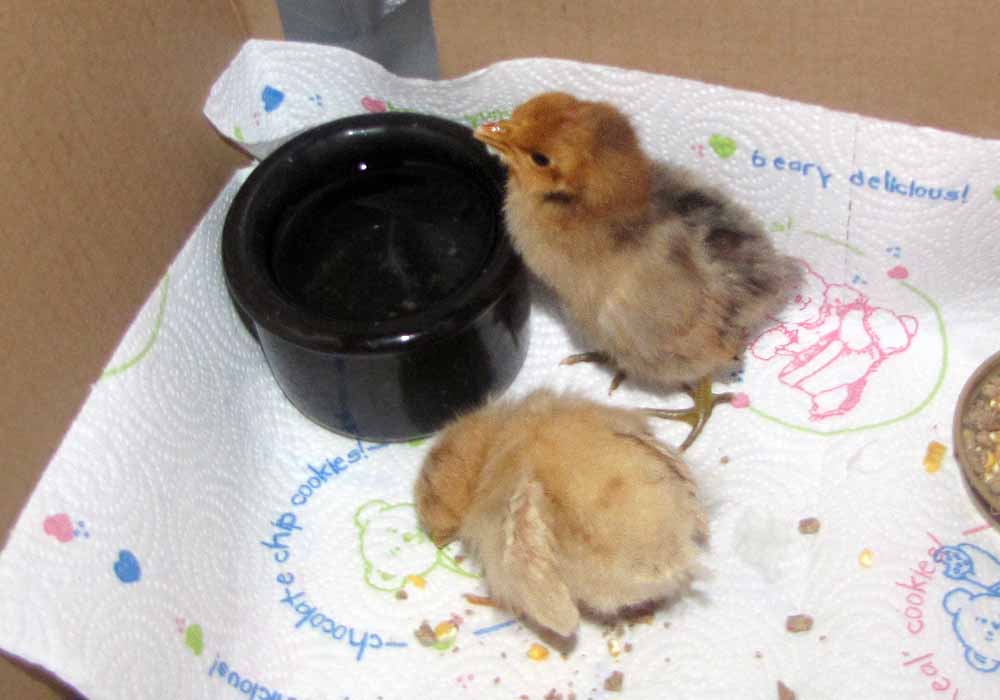
Guess they’re mine.
Another Batch Of Guinea Keets
When we got back from vacation, we noticed we had a bunch more guinea keets.
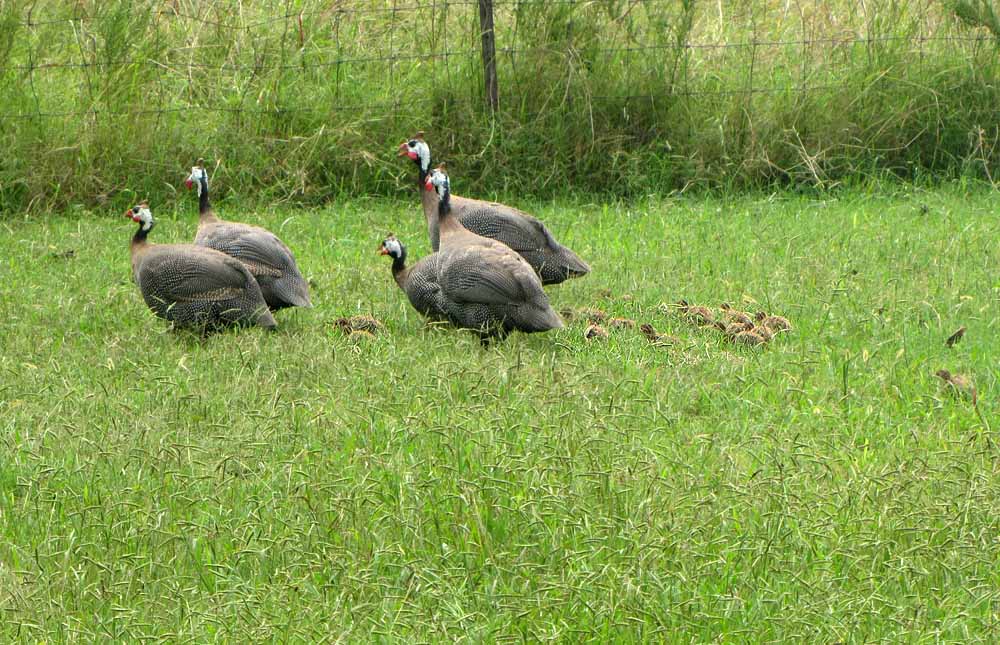
It’s impossible to count them. For one thing, they’re staying in tall grass right now. That means you can’t see half of them at any given time!
And for another thing, they may be little, but they can move FAST. I’ve counted up to 20, but I think it will be a while before we see how many there really are!
Requiem For Rowan
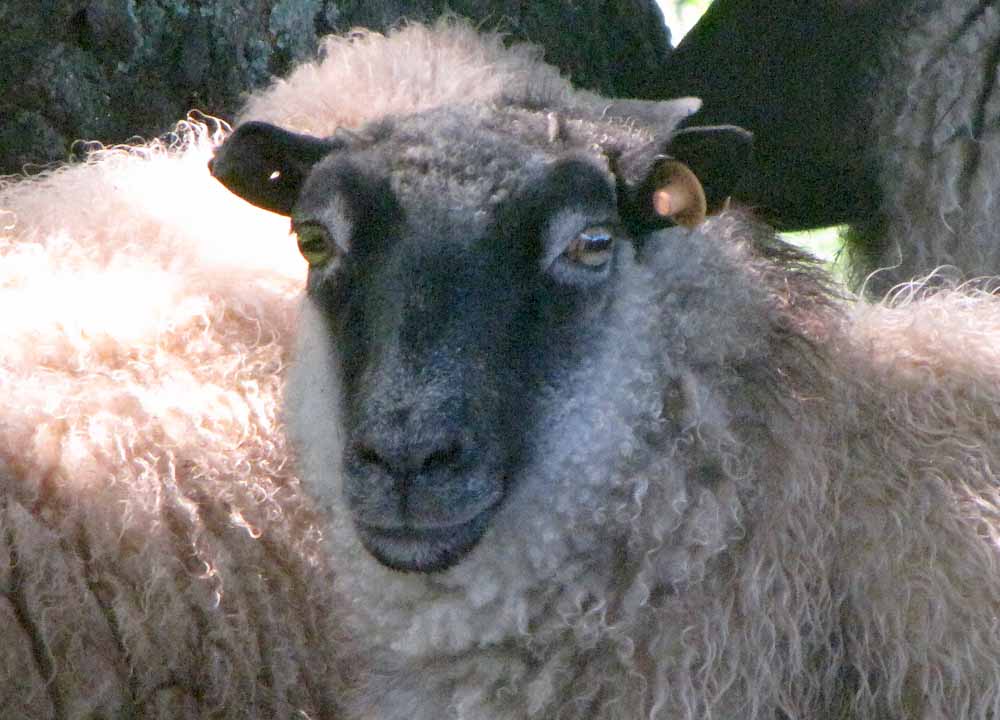
Rowan was one of our elderly retired ewes. Yes, that is unfortunately past tense because she died Monday. I just came back from some final touches to her grave. I’m going to miss her.
She had some of the most wonderful Shetland sort of fleece, with a double coat, long staple, and velvety soft. She was a great mother, and had the most beautiful lambs!
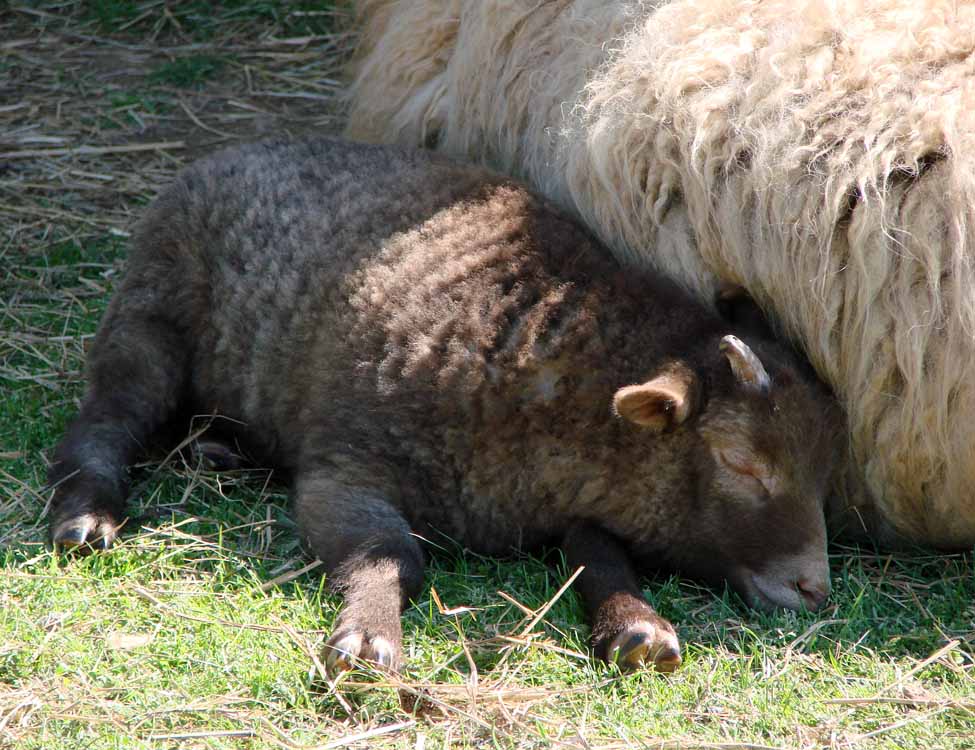
This was the last live lamb she had, a wonderful little guy with moorit colored fleece.
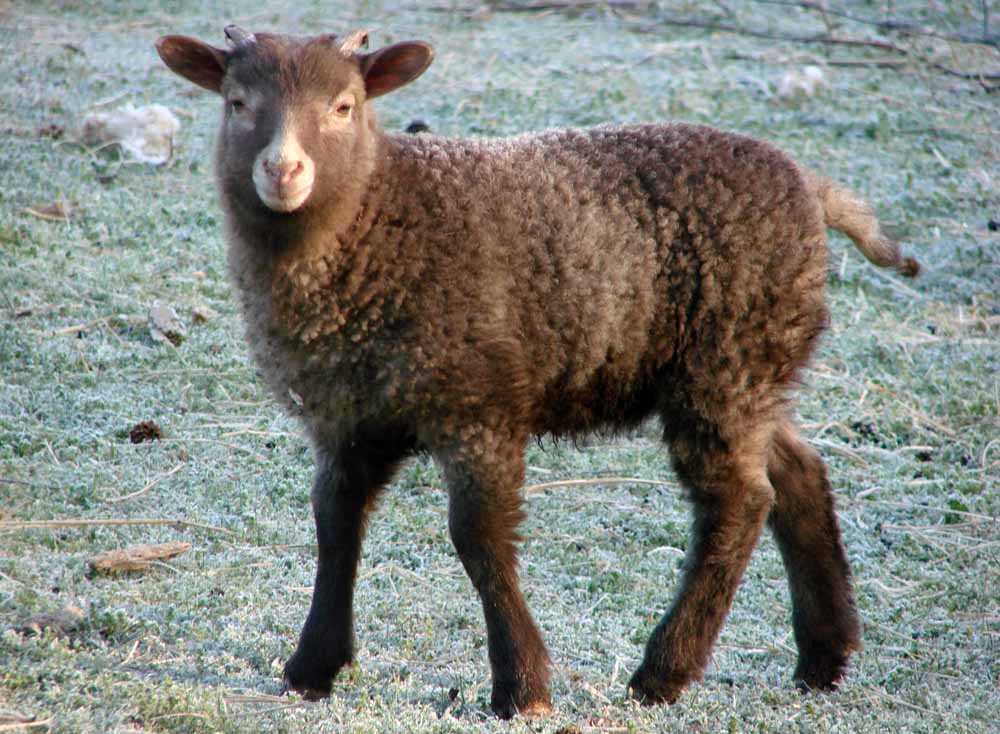
His mama took good care of him.
The year before that she had a lovely little white ram lamb. We didn’t have many white lambs. Shetlands have such a variety of beautiful colors, it seemed a shame to do much breeding for white.
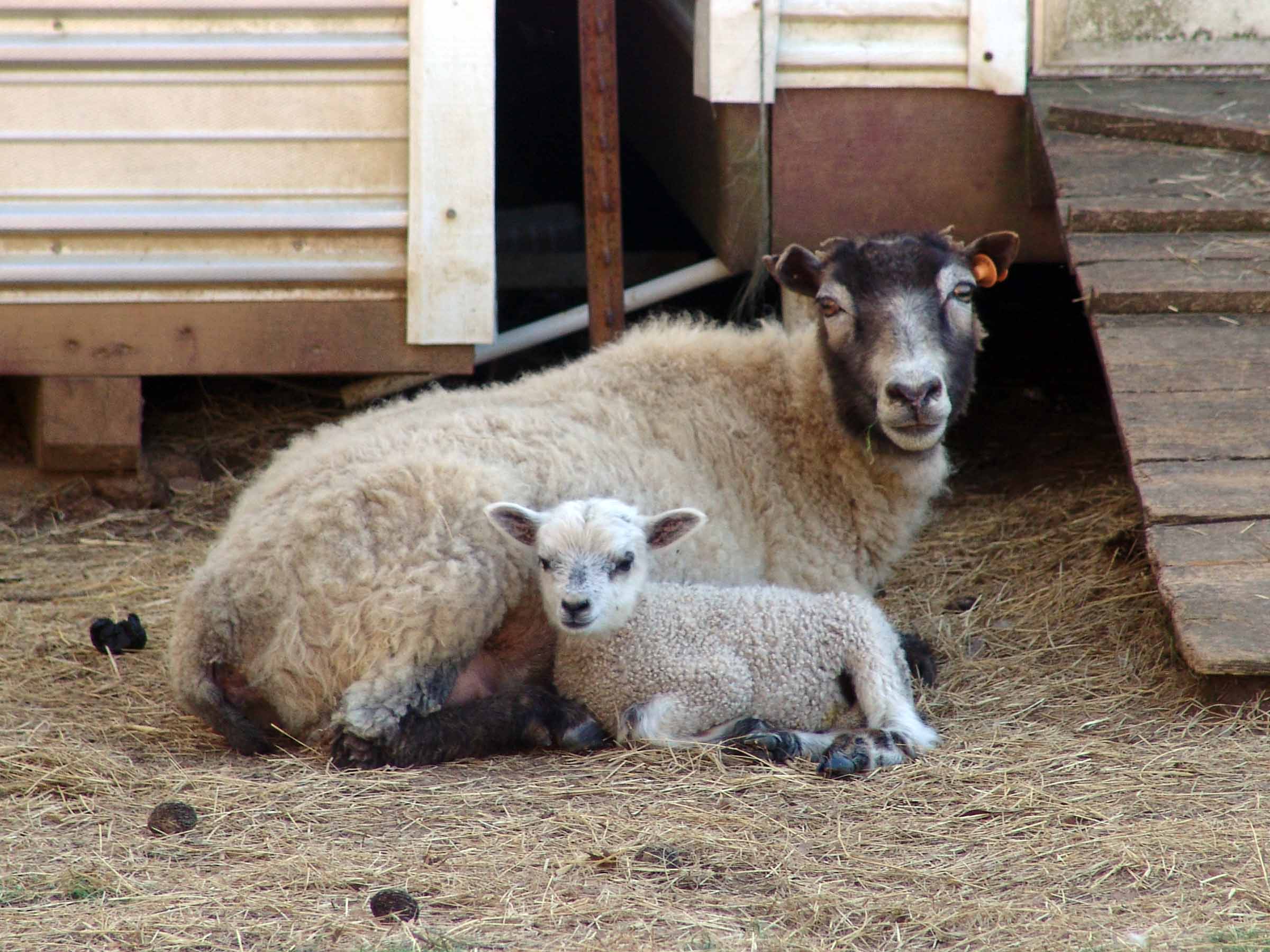
I called him Casper. It seemed appropriate.
In her prime, Rowan was apt to have twins. She always had plenty of milk for them. And they were always such beautiful lambs, too!
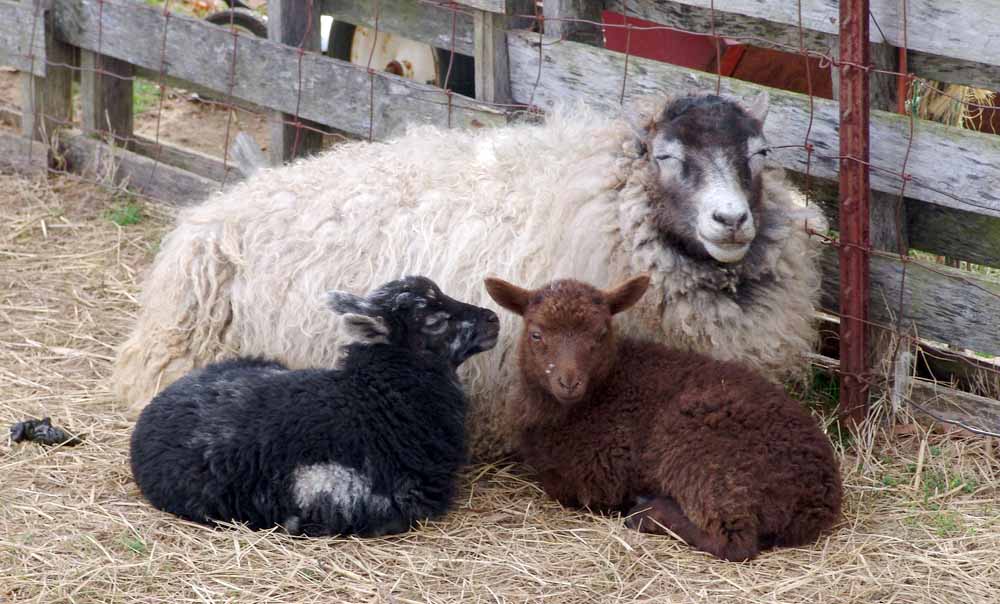
The lamb on the left ended up with shaela colored fleece (dark steely-grey, like black frost), and the lamb on the right is moorit (dark reddish brown).
And did I mention what a wonderful, patient mother she was?
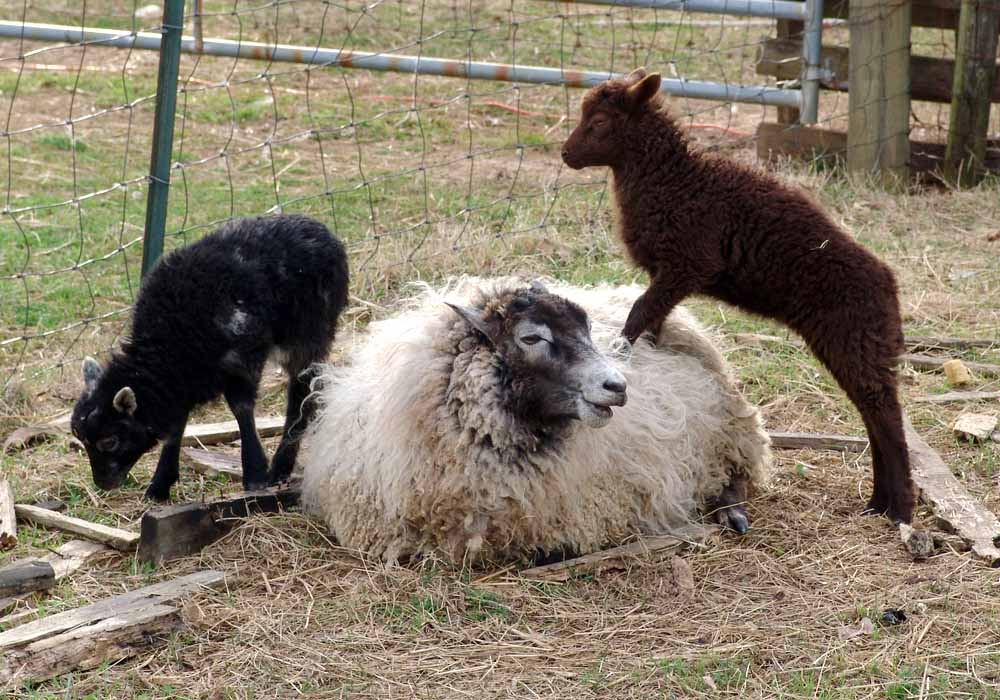
I mean really, REALLY patient!

She never seemed to mind when her lambs used her for a jungle gym.
And Rowan was even a good babysitter! There would often be other lambs hanging out with hers.
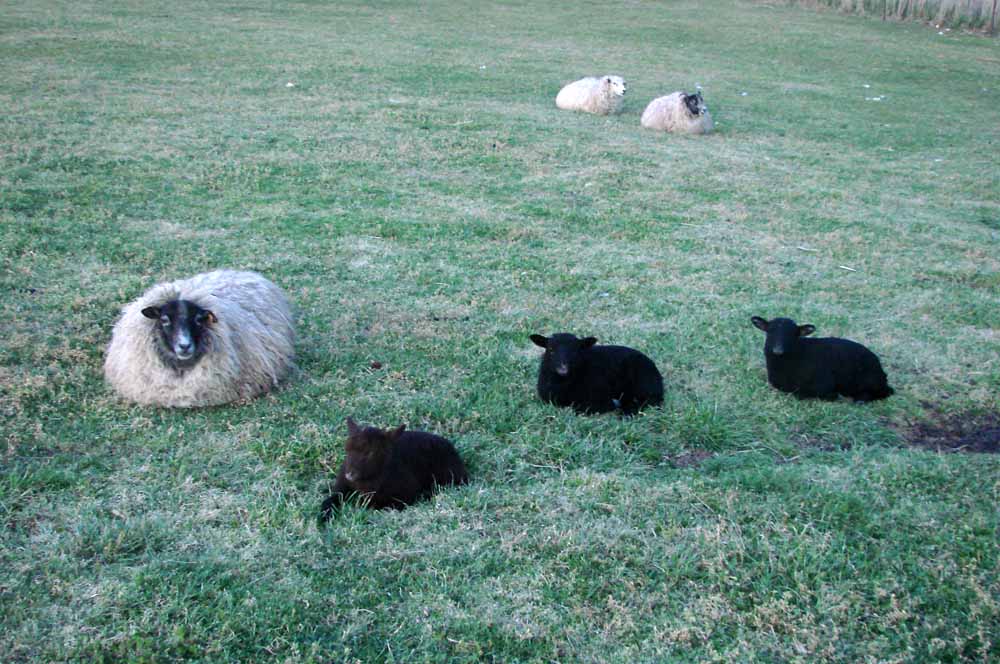
Being of friendly disposition, Rowan also got along with her fellow sheep. Here she is with a couple of her fellow retired buddies this last spring, not too awfully long after being sheared.
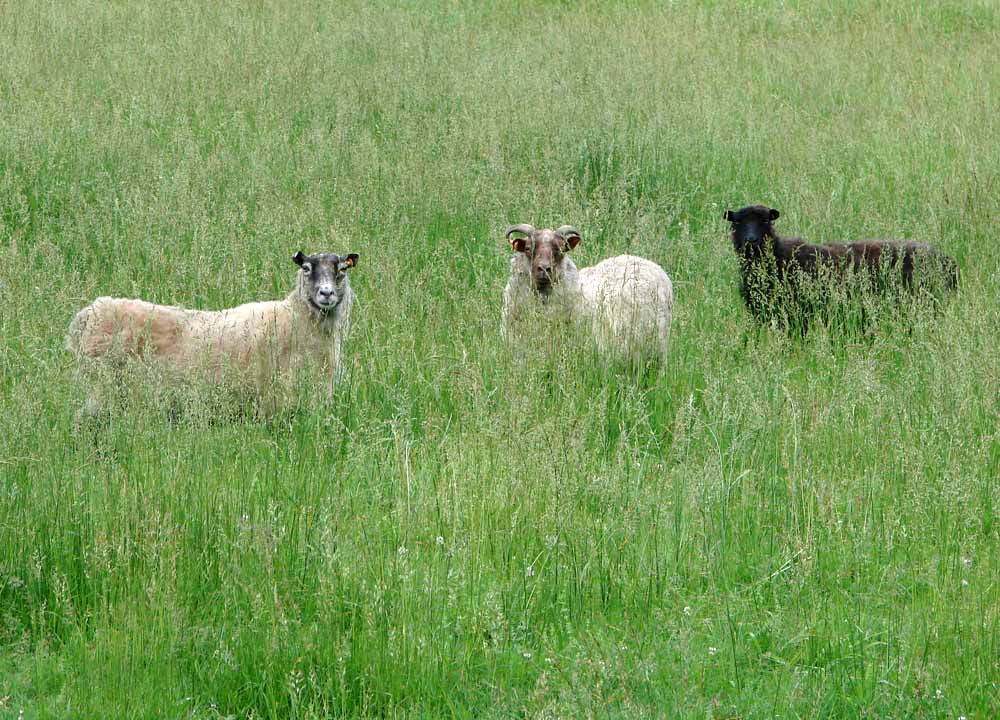
Here they are later in the summer, after their wool grew out a little.
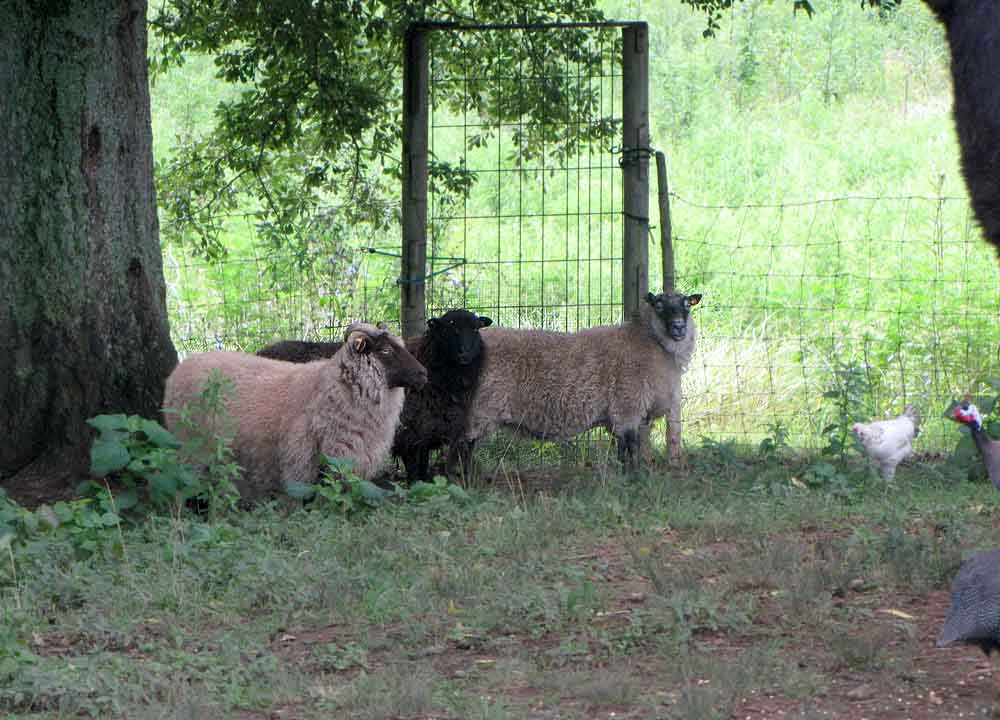
She had wonderful fleece, gave birth to beautiful lambs, was a good mother with plenty of milk, had a good disposition. . . what more can you ask from a sheep? She deserved her retirement and I enjoyed having her around.
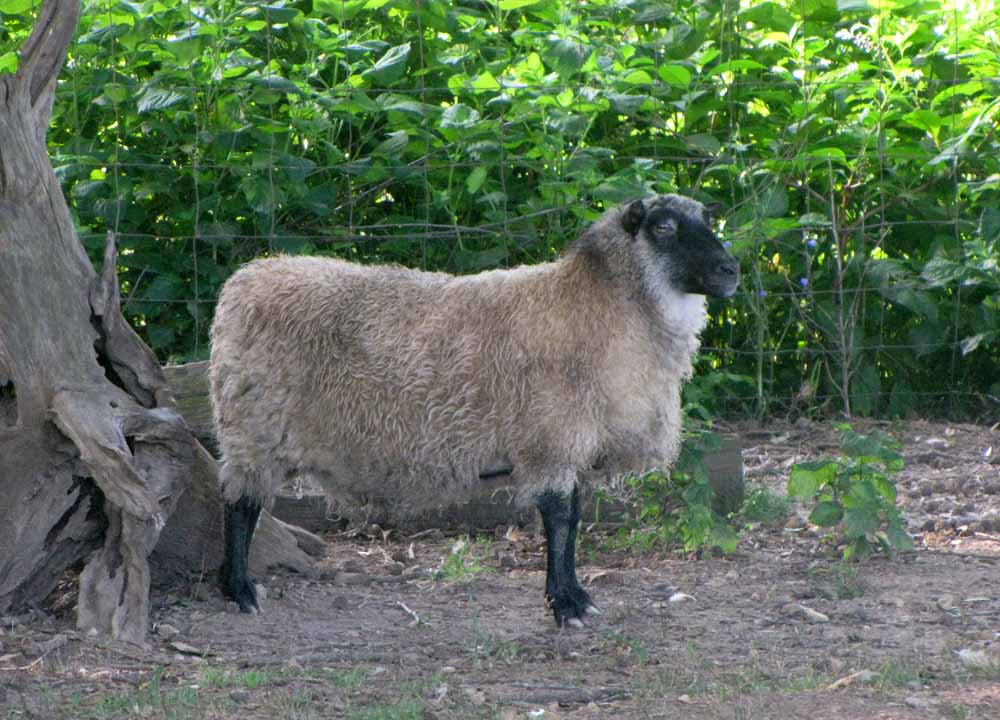
I’m really going to miss her.
Foraging Chickens
I grow chickens in my rosebed. Well, sort of. I mean, every morning when I go outside, there are always a bunch of them there, so they must be growing there, right? Oh okay then, how about they’re growing fatter because they’re eating bugs and stuff in the rosebed?
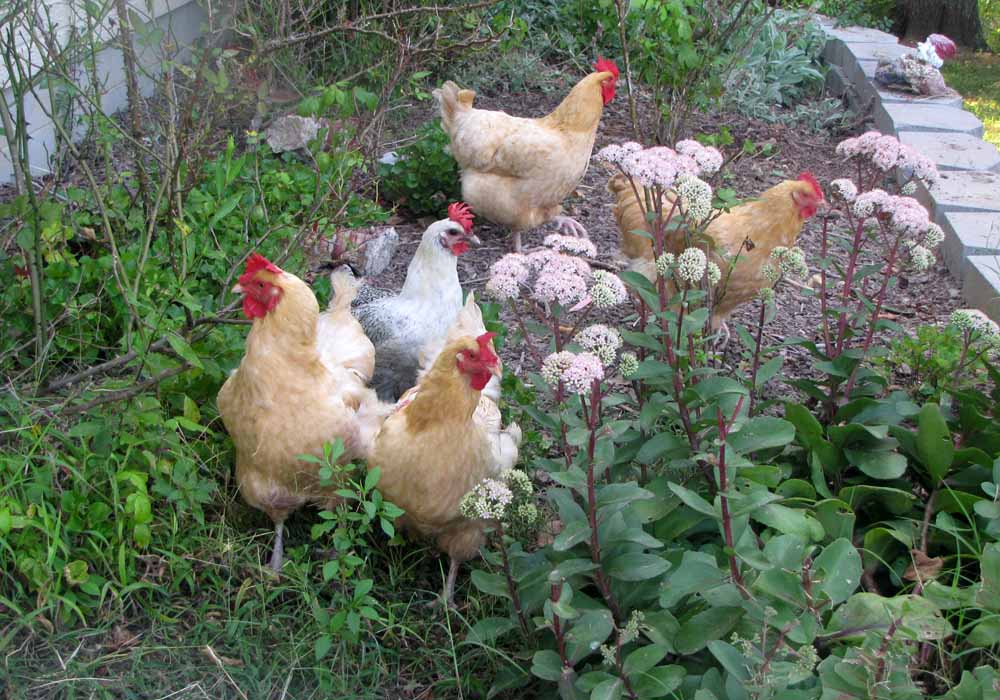
Of course, the minute they see me come outside, they run out of the rosebed and head for the feedroom, because they know I’ll be throwing out some cracked corn and they love it.
But the rest of the day, they’re out on their own, looking for a bug buffet anywhere they can find one.
The Farmer made the comment the other day that he bets most people don’t realize how much chickens graze. Since technically graze is defined as:
Graze (grāz) to feed on growing grasses and herbage
. . . maybe forage would be the better word.
for·age (fôr′ij, fär′-) a search for food or provisions
They ARE grazing to the extent they eat seeds and bits of grasses and stuff, but they are also looking for bugs, so they might best be said to forage.
Got to get our terminology straight, ha, ha!
Seriously, I think a lot of people believe chickens just eat some corn or other feed thrown out to them. Well, if that’s all they have available, then yes, that’s true. But if you let them out to FORAGE, they will eat lots of bugs, because that’s just what they naturally eat.
It’s a wierd world when we give cattle feed with animal protein in it, and they are truly
her·bivo·rous (hər biv′ər əs) feeding chiefly on grass or other plants
but we want to feed chickens nothing but grains when they are actually
om·niv·o·rous (om-n
v
r-

Seems like it would make more sense to feed animals the type of diet they were naturally intended to eat.
But hey, that’s just me.